Region:Asia
Author(s):Geetanshi
Product Code:KRAA3694
Pages:93
Published On:September 2025
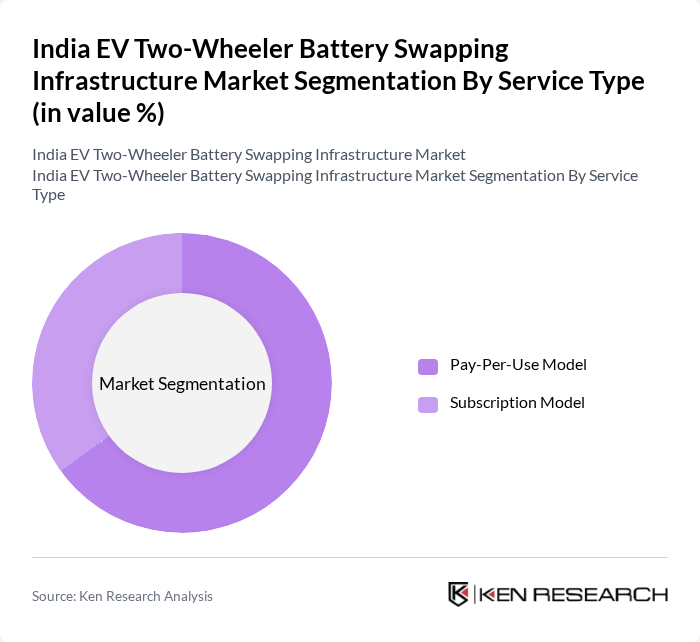
By Service Type:The service type segmentation includes two primary models: Pay-Per-Use and Subscription. The Pay-Per-Use model allows users to pay for each battery swap, making it a flexible option for occasional users. In contrast, the Subscription model offers users a fixed monthly fee for unlimited swaps, appealing to regular users and fleet operators. The Pay-Per-Use model is currently dominating the market due to its affordability and convenience for individual consumers who may not require frequent swaps.
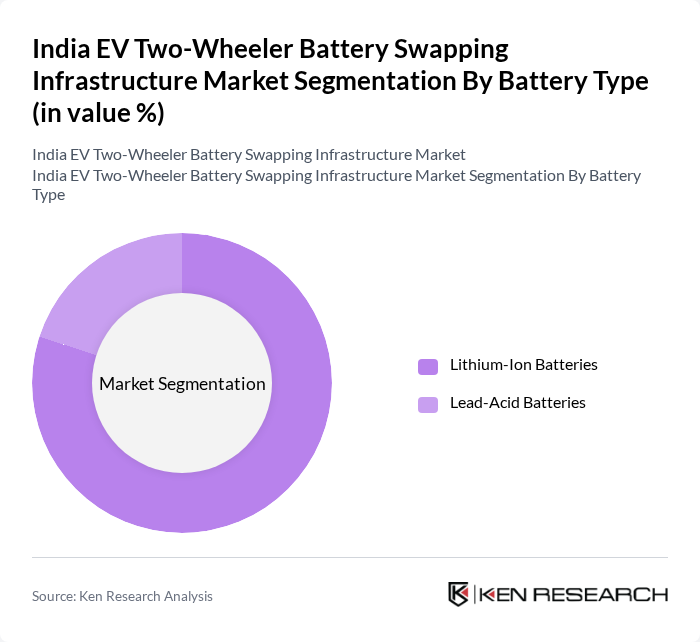
By Battery Type:The battery type segmentation consists of Lithium-Ion and Lead-Acid batteries. Lithium-Ion batteries are preferred due to their higher energy density, longer lifespan, and lighter weight, making them suitable for electric two-wheelers. Lead-Acid batteries, while cheaper, are gradually being phased out due to their lower efficiency and shorter lifespan. The Lithium-Ion battery segment is leading the market, driven by advancements in battery technology and increasing consumer preference for high-performance electric vehicles.
The India EV Two-Wheeler Battery Swapping Infrastructure Market is characterized by a dynamic mix of regional and international players. Leading participants such as Sun Mobility, Ola Electric, Bounce Infinity, VoltUp, Battery Smart, Yulu Bikes, Gogoro India, Hero MotoCorp, Honda Power Pack Energy India, Lithion Power, Esmito Solutions, Chargeup, Zypp Electric, Exponent Energy, Kinetic Green Energy & Power Solutions Ltd. contribute to innovation, geographic expansion, and service delivery in this space.
The future of the India EV two-wheeler battery swapping infrastructure market appears promising, driven by increasing urbanization and a growing emphasis on sustainable transportation. By future, advancements in battery technology and the integration of smart city initiatives are expected to enhance the efficiency of battery swapping stations. Additionally, partnerships with e-commerce and delivery services will likely create new revenue streams, further solidifying the market's growth trajectory as electric vehicle adoption accelerates across the country.
| Segment | Sub-Segments |
|---|---|
| By Service Type | Pay-Per-Use Model Subscription Model |
| By Battery Type | Lithium-Ion Batteries Lead-Acid Batteries |
| By End-User | Individual Consumers Fleet Operators (Delivery & Ride-Sharing) Government Fleets |
| By Region | North India South India East India West India |
| By Application | Urban Commuting Last-Mile Delivery Public Transport Others |
| By Investment Source | Private Investments Government Funding Foreign Direct Investment (FDI) Public-Private Partnerships (PPP) |
| By Policy Support | Subsidies Tax Exemptions Regulatory Support Others |
| Scope Item/Segment | Sample Size | Target Respondent Profiles |
|---|---|---|
| Battery Swapping Service Providers | 60 | Operations Managers, Business Development Managers |
| Electric Two-Wheeler Manufacturers | 50 | Product Managers, R&D Managers |
| Government Policy Makers | 40 | Regulatory Affairs Officers, Policy Analysts |
| End-Users of Electric Two-Wheelers | 100 | Consumers, Fleet Operators |
| Infrastructure Developers | 45 | Project Managers, Investment Analysts |
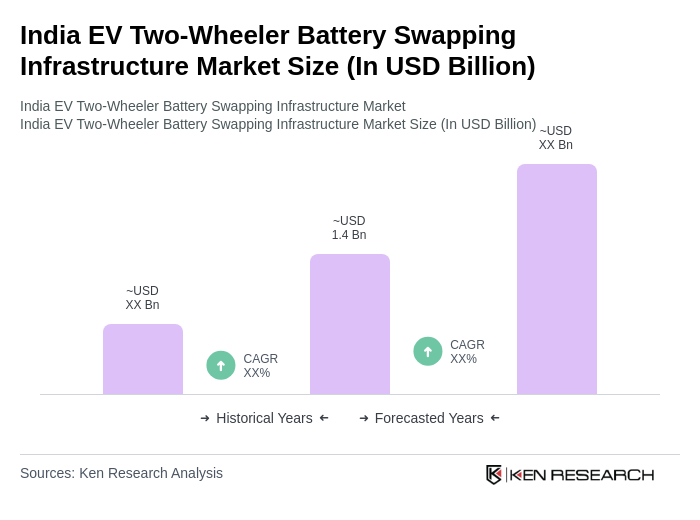
The India EV Two-Wheeler Battery Swapping Infrastructure Market is valued at approximately USD 1.4 billion, reflecting significant growth driven by the increasing adoption of electric vehicles and government initiatives promoting sustainable transportation.

What makes us stand out is that our consultants follow Robust, Refine and Result (RRR) methodology. Robust for clear definitions, approaches and sanity checking, Refine for differentiating respondents' facts and opinions, and Result for presenting data with story.

We have set a benchmark in the industry by offering our clients with syndicated and customized market research reports featuring coverage of entire market as well as meticulous research and analyst insights.

While we don't replace traditional research, we flip the method upside down. Our dual approach of Top Bottom & Bottom Top ensures quality deliverable by not just verifying company fundamentals but also looking at the sector and macroeconomic factors.

With one step in the future, our research team constantly tries to show you the bigger picture. We help with some of the tough questions you may encounter along the way: How is the industry positioned? Best marketing channel? KPI's of competitors? By aligning every element, we help maximize success.

Our report gives you instant access to the answers and sources that other companies might choose to hide. We elaborate each steps of research methodology we have used and showcase you the sample size to earn your trust.

If you need any support, we are here! We pride ourselves on universe strength, data quality, and quick, friendly, and professional service.















